The Fascinating Construction of the Great Wall
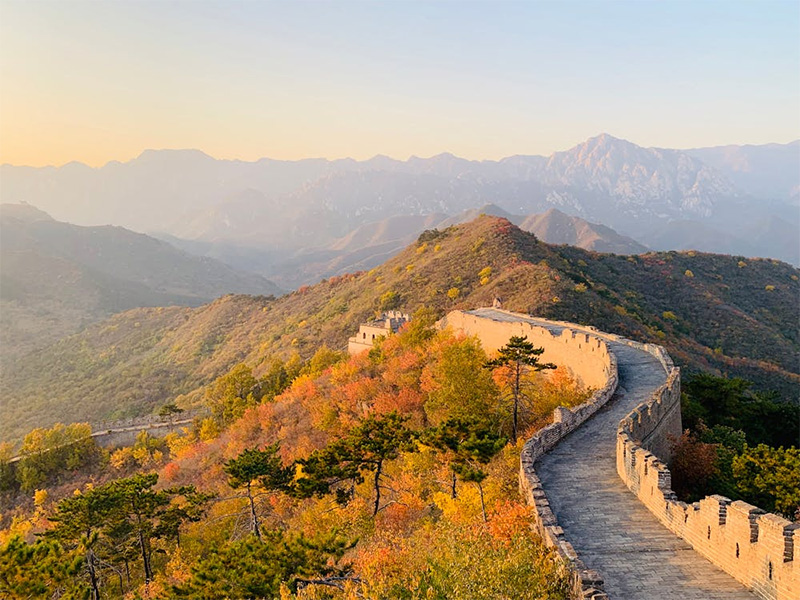
Engineers today throw software and steel at problems and call it innovation. Ancient Chinese builders moved mountains with rope, earth, and stubborn intent. The structure in question didn’t appear as a single grand project. It grew in fits and starts, under anxious rulers who feared horsemen from the north more than budget overruns. Different states built their own lines, using whatever materials sat under their feet. Over centuries, rulers linked, rebuilt, and extended those lines into something vast. Not neat. Not uniform. But brutally effective as a construction effort on a continental scale.
A Chain of Regional Experiments
The popular image shows one clean, unbroken wall marching over the horizon. Reality laughs at that picture. Early sections rose during the Warring States period, when rival kingdoms built their own fortifications with zero interest in architectural harmony. One state relied on tamped earth, another on stone, another on wood and local brick. Heights, thickness, and layouts shifted with each region’s terrain, labor pool, and paranoia level. Only when the Qin and, later, the Han pulled power into one fist did large stretches get linked and reinforced. The result looked less like a single project and more like a brutally long, evolving test lab in the open air.
Earth, Brick, and Whatever Worked
Construction teams grabbed materials the way smart managers grab data: from what’s close, cheap, and reliable. In the loess plateaus, workers rammed packed earth between wooden boards until the layers hardened like concrete. In rocky regions, stone blocks formed foundations and outer faces, with rubble stuffed in between. Later Ming builders, stung by earlier collapses, favored fired brick, lime mortar, and stone pavements for the top. That mix let defenders move fast and kept the structure standing on steep slopes. No romance here, just cold pragmatism. Each valley, ridge, and river crossing forced a new material recipe, tuned to weight, erosion, and enemy tactics.
Human Logistics on a Harsh Scale
Forget the myth of a few heroic masons. This was logistics warfare. Administrators pulled soldiers, peasants, prisoners, and forced labor from wide territories, then pushed them toward remote, windswept sites. Food, tools, and water had to reach high ridges without trucks or rail. So the system leaned on caravans, animal power, and long chains of human carriers. On narrow mountain paths, workers passed bricks hand to hand like a living conveyor belt. Conditions turned brutal. Cold, heat, and altitude punished bodies already strained by quotas. Yet the labor machine kept moving, because the state treated the wall as insurance against disaster, not as an optional public works project.
Defense by Design, Not Just Height
The structure didn’t win its reputation from height alone. The smart part sits in the layout. Beacon towers rose at intervals, close enough for smoke, fire, or flags to pass signals in minutes across long distances. Fortified passes controlled the main roads, with gates, courtyards, and side walls that could trap attackers in crossfire. Inside, barracks, cisterns, and storage let garrisons stay on site for long stretches. Sloped faces and parapets gave archers clear lines of fire, while stairways and ramps let defenders shift quickly to threatened points. The whole system worked like a networked security platform, where walls, towers, and forts acted as mutually reinforcing nodes.
Modern observers often praise the monument as a symbol, then stop there, which misses the real lesson. Its construction shows what long-term focus, hard coordination, and flexible design can produce, even with crude tools. It also shows the price: enormous human strain and constant rebuilding to answer new threats and new failures. The structure never froze in a perfect form. It kept changing with politics, technology, and fear. That ongoing adjustment, more than any single brick, turned a scattered set of frontier defenses into one of history’s most ambitious building efforts.
Photo Attribution:
1st & featured image by https://www.pexels.com/photo/ancient-stone-wall-going-through-green-hills-4445240/
2nd image by https://www.pexels.com/photo/barrels-and-worker-with-hat-8260108/
-
 Exploring the Majestic Islands of Fiji. Find Out What You Shouldn’t Miss to Make the Most Out of Your Travel
-
 6 Places in Alaska that are Extremely Stunning and Breathtaking
-
 Crossing the Sahara: Camel Trekking in Morocco’s Erg Chebbi Dunes
-
 Perth: Explore Its Natural Beauty with a Laid Back Atmosphere
-
 Ways to Deal With People Stereotyping You During Your Trip

