The Classic Chicago Architecture Walk
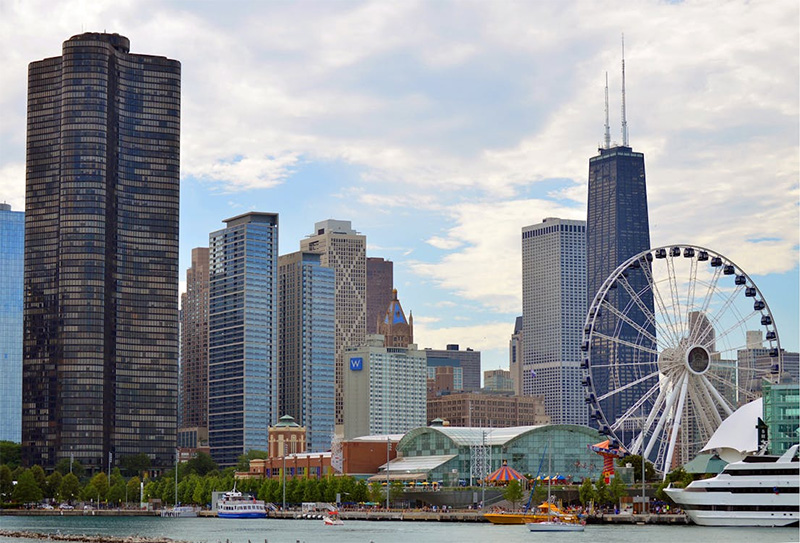
Chicago doesn’t whisper its history; it stacks it in stone, glass, and steel, block after stubborn block. A walk through the core of the city turns into a blunt argument with time: fires, ambition, money, and civic ego, all fighting for the skyline. And the street wins every round. Stand at any corner, and the eye jumps from heavy brick to sleek curtain wall without warning. So the walk stops feeling like tourism and starts feeling like reading a very loud, very opinionated textbook that refuses to end neatly.
Where the Fire Rewrote the Rules
Start near the Chicago River, where the city practically burned itself into modernity. The Great Fire didn’t just clear space; it exposed every bad choice in building and forced better ideas. And that’s why the walk matters here first. Cast-iron fronts, thick masonry, conscious attempts at fireproofing: they all show a city arguing with its past mistakes. So the street becomes a lab. Architects tested structure, height, and style, while business owners demanded speed and spectacle. The result looks chaotic, but it’s ruthless problem‑solving in brick and steel, with profit as referee.
Stone, Steel, and the Birth of Tall
South along LaSalle or Clark, the argument turns vertical. Early skyscrapers don’t hide their bones; they brag. And that bragging builds a new kind of order. Strong steel frames carry weight, so walls stop pretending to be load‑bearing heroes. Windows stretch, light floods in, and office life climbs story after story. So the walk reads like a manual on height. Chicago’s so‑called school of architecture locks onto one idea: form should follow what a building actually does. The façades start to look honest, almost smug about it, like they’ve solved a moral problem.
Art Deco Swagger and Corporate Power
Then the mood shifts into pure swagger. Step near the Board of Trade or the old Carbide and Carbon building and nothing stays subtle. And that’s the point. Geometric ornament, stylized metalwork, and vertical ribs turn stone into propaganda for progress and profit. So the walk stops at these towers longer than anywhere else. Every lobby insists on ritual: polished marble, symbolic murals, banking halls that feel like secular cathedrals. The buildings don’t just house business; they stage it, choreograph it, and brag about who calls the shots in this steel‑ribbed theater.
Glass Boxes and the Gospel of Less
Turn toward the river again, and the city slices away the ornament. Enter the age of Mies and his disciples, who treat fuss like a crime. Steel, glass, perfect grids: that’s the new sermon. And the walk suddenly hits silence, visually speaking. No gargoyles, no flourishes, just clean lines and strict rhythm. So the argument changes from “how high” to “how clear.” These towers insist that structure and proportion already carry enough drama. The city doesn’t shrink; it just starts speaking in a colder, sharper accent that rewards patience and close looking.
Walk long enough and the city explains itself without asking permission. Fire, commerce, engineering, and ego each grab a slice of street and stack it into the sky. And every block calls the previous generation either brilliant or foolish. That tension turns the route into more than a sightseeing loop; it becomes proof of how quickly ideas age and shed their prestige. So anyone who pays attention hears the same blunt message from brick, stone, and glass alike: build with conviction now, because the next wave will judge without mercy or nostalgia.
Photo Attribution:
1st & featured image by https://www.pexels.com/photo/chicago-cityscape-161963/
2nd image by https://www.pexels.com/photo/lighthouse-at-the-end-of-a-stone-breakwater-of-chicago-harbor-19652052/