A Slow Travel Route Through Tuscany
Speed ruins Tuscany. Trains blast through valleys, buses scrape past hilltop walls, and everyone stares at screens instead of stone. The region resists that pace. It sulks when rushed. So the only honest way through it moves slower than habit and faster than boredom. Start with a simple rule: fewer towns, longer stays. And no frantic checklist of sights. One valley, a couple of villages, long lunches, and time for getting lost. That route turns scenery into memory instead of slideshow, and strangers into something closer to neighbors.
Florence: Learn to Walk Slowly Again
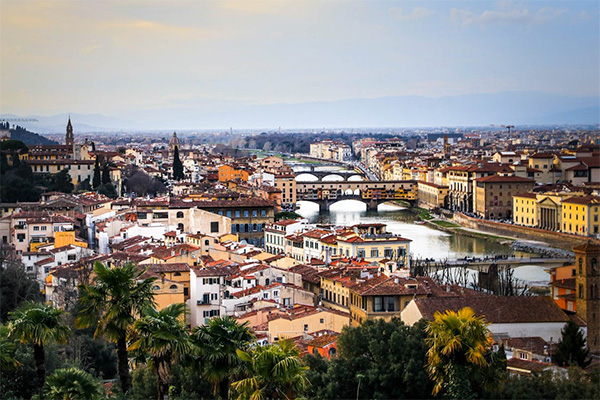
Every lazy route through this region starts with walking lessons, and Florence teaches them. Not museums first. Streets first. So cross the Arno early, when shop shutters still yawn, and the city smells like coffee and stone dust. And keep one direction: away from crowds. Head toward Santo Spirito, sit, order anything, and watch locals argue about nothing and everything with the same seriousness. No rushing across every bridge. Pick one, own it for a day. That restraint resets the brain, like deleting a calendar full of pointless alerts and letting silence sit in the empty slots.
Chianti by Back Road and Bad Map
Real slow travel starts once the city disappears in the rearview mirror and phone reception falters. Chianti isn’t just wine labels; it’s that crooked road between Greve and Radda where drivers curse hairpin turns, then pull over anyway because the view insults any attempt at indifference. So ditch the highway. Take the worst-looking paved road on the map. And stop often, not just at wineries. Tiny churches, half-abandoned farmhouses, roadside shrines with plastic flowers; this stretch rewards curiosity more than reservation confirmations. Even wrong turns pay off, because confusion forces questions, and questions invite conversations that no guidebook prints.
Siena: Where Time Walks in Circles
Siena doesn’t move forward. It circles. Everything spirals toward the shell-shaped square, like water down a drain, only slower and with better coffee. So the smart traveler checks in for two nights and then pretends the rest of the planet paused. Walk each contrada, notice the animal flags, the quiet rivalry, the faded race posters. And skip the midday museum sprint. Sit on the warm brick of the square instead, leaning back, letting kids run chaotic circles that secretly mirror the whole city. Stay through evening, when day-trippers vanish, and the square turns into a living room for the town.
Val d’Orcia: The Long Pause Between Villages
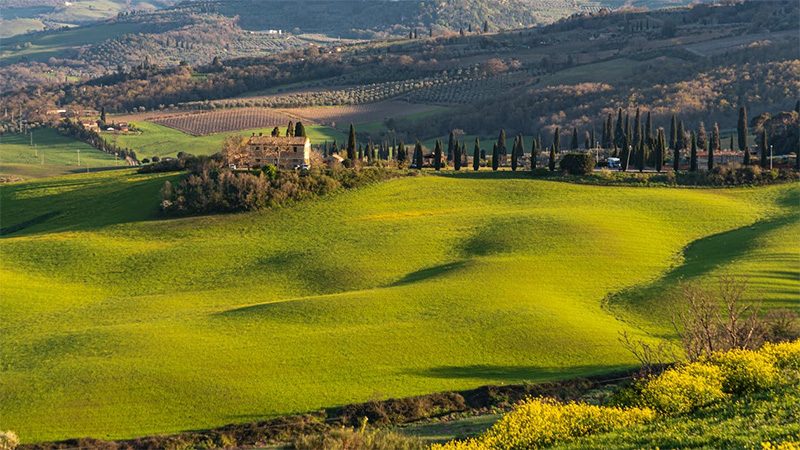
South of Siena, the land finally remembers how to breathe. The Val d’Orcia rolls out in soft folds, all wheat, cypress lines, and lonely farmhouses pretending not to pose for postcards. Here, slowness stops being theory and becomes survival, because rushing past this scenery borders on crime. So pick one base: Pienza, Montepulciano, or Montalcino. And stay. Walk between villages when the light turns liquid near sunset. Sit in thermal baths until fingers wrinkle. Let each day shrink to meals, walks, and sky, then stretch again at night when the hills go dark and every sound grows louder.
Fast travel collects proof. Slow travel collects stories. This route through Florence, Chianti, Siena, and the Val d’Orcia doesn’t promise completeness; it openly rejects it. And that’s the point. The region always holds more than any schedule, so a traveler either surrenders or skims. Stay longer than feels reasonable in each stop, say yes to unplanned invitations, and skip at least one famous sight on purpose. That small rebellion turns a normal trip into something that lingers like good red on the tongue, and keeps returning in memory when regular souvenirs already fade.
Photo Attribution:
1st & featured image by https://www.pexels.com/photo/scenic-green-hills-of-tuscany-in-springtime-29775071/
2nd image by https://www.pexels.com/photo/cityscape-of-florence-18337173/